I was out with a new Mammy friend yesterday and the talk turned as it often does to sleeping and from there to breastfeeding when I "outed" myself as STILL feeding. I've thought about why I feel the need to do this and have come to the conclusion that it's because I know that there are loads of closet toddler-feeders out there (ok, not loads but there are others beside me, even though it might feel very lonely most of the time) and if we don't go public then it'll always be seen by some as one step away from child-abuse. (Persecution complex? Moi?)
Anyway, she told me she thought it was great that I was still feeding and said she lasted 4 days. Why did she give up? She had a section, her milk hadn't come in, she had sore nipples and she wanted to sleep. She said this without getting anyway defensive, apologising for herself or trotting out the old "it didn't work out for me" line. She made her choice, she was happy with it, she was happy for me that I was still feeding and that was the end of it. She felt no need to justify herself to me for not breastfeeding or to make me feel like an alien because I was still doing it and I didn't scold her for her lack of commitment or bang on about the benefits that her child was missing out on. In short, no-one felt accused of child abuse. Refreshing.
I read somewhere that during the child-rearing years, we align ourselves with others who share our parenting philosophies. I can see this happening in my own life, but does it have to mean binning the friends I have already or blackballing new ones that I have lots in common with apart from our parenting styles? Difference of opinion on how to raise children can definitely be a cause of friction in friendships but doesn't have to threaten them. Acceptance of these differences is key. Caring for a child involves a million and one choices - some of them big, some of them trivial - but they are just that - choices. If mine are different to yours, then it doesn't invalidate the ones you've made and there is no tacit criticism intended. Don't feel the need to defend, justify or explain yourself. I won't. Right, I'm off to work on that myself.....
Wednesday, July 20, 2011

Banana "flapjacks"
Haven't posted in an age so thought I would get things going again with a handy little recipe for those of you who don't like giving Liga or rusks as a snack and resent paying Organix prices for something a little more nutritious. These are super easy, healthy and handy for a between meals pick-me-up either at home or on the move for babies, toddlers and mammies trying to be good!
You will need:
Voila! An oaty flapjacky bar thing that costs a fraction of what you'd pay in the supermarket and tastes just as good.
You will need:
| 2 - 3 small bananas 1 cup chopped prunes (or other dried fruit such as dates, apricots, raisins or a mixture) 2 cups oats 80ml vegetable or sunflower oil 1 teaspoon vanilla essence | |
Voila! An oaty flapjacky bar thing that costs a fraction of what you'd pay in the supermarket and tastes just as good.
Wednesday, May 4, 2011
Super fast falafel

I'd no salsa and couldn't be bothered making one so subsituted sliced tomatoes and livened the whole thing up with some mango salsa which was totally delish. They're low fat and healthy although eating several filled pitta breads might require a calorie per portion recalculation.
http://www.bbcgoodfood.com/recipes/5605/falafel-burgers
Sunday, May 1, 2011
A surprisingly tasty couscous salad
For most of C's first year, I had lunch out a couple of times a week, meeting various friends and family. However, since she became a toddler, getting out for lunch is a rarity, for a few reasons. Top of the list is that she can't sit still for more than about 15 seconds unless it's breakfast or dinner time. She also naps from 12 - 2 which makes meeting people more difficult. Plus since PermanentTSB decided we weren't paying enough mortgage interest on our drastically devalued house, there really isn't the cash floating around to pay for ciabattas and lattes that often.
Apart from dinner, my daily diet has seemed to consist of little more than porridge, fruit and toast (plus a mountain of chocolate) for the past couple of months so this week I decided to get a bit more proactive and root out some tasty looking lunch recipes that didn't take too long to make.
So I tried this yesterday and it couldn't have been better. Takes 10 minutes to make and it kind of tastes like summer, especially when the sun obliges and you can eat al fresco. Enjoy!
http://www.bbcgoodfood.com/recipes/11690/10minute-couscous-salad

Apart from dinner, my daily diet has seemed to consist of little more than porridge, fruit and toast (plus a mountain of chocolate) for the past couple of months so this week I decided to get a bit more proactive and root out some tasty looking lunch recipes that didn't take too long to make.
So I tried this yesterday and it couldn't have been better. Takes 10 minutes to make and it kind of tastes like summer, especially when the sun obliges and you can eat al fresco. Enjoy!
http://www.bbcgoodfood.com/recipes/11690/10minute-couscous-salad
Thursday, April 21, 2011
Stuff no one told you # 451 - dealing with a blocked nipple pore

The first time it happened to me was when C was six weeks old. It was a beautiful day and we driving to Mount Usher Gardens in Wicklow. I became aware of a hard area in my breast that I thought was a blocked duct (when she was handing out boob blockages, Mother Nature was particularly generous to me so I already had considerably experience in the field despite my recent arrival in Mammyland). I massaged and massaged but to no avail. The hard area got bigger and lumpier and more and more sore. I'm not quite sure why it dawned on me what the problem was but when we stopped for coffee I went into a toilet cubicle and searched my nipple thoroughly for the offending blockage. Another unimaginably unglamorous moment in the life of a new mother.
After a bit of scrabbling around in the folds of my own nipple, I located a white dot that was quite literally the troublespot. Very relieved to find the source, I couldn't remember the treatment so decided we'd better head home and went to tell P. As I sipped my coffee, my boob was becoming sorer by the second and so I went back to the bathroom to have another look. I decided to give in to my urges and have a squeeze and then - whooooosh!! The plug popped out and a torrent of milk gushed out like water out of a fire hydrant. It kept going for over a minute as all the milk that had been backed up exploded out of the pore. The relief was enormous and, I must admit, exhilarating (hey, I hadn't been out much that year). So much so that it was actually worth the whole horrible experience. I ran out of the loo to spread my good news, put C to the boob to finish off the job and ten minutes later I was good as new and off to enjoy my day out.
This ehow post on blocked ducts is a good thing to have in your bookmarks folder as it goes through a process that might help you to identify the sort of blockage you are dealing with.
With any luck you will never again have to refer to this stuff. I sure hope I never do! One way to keep pesky pore plugs at bay if you are prone to them seems to be to wash and dry your nipples after every feed. Prevention is better than cure, and all of that.
Wednesday, April 20, 2011
SIDS and room sharing - the evidence
All new parents know (or at least they should) that it is recommended to keep their infants sleeping in the same room with them for the first six months of life. This is because "research" shows that the risk of Sudden Infant Death Syndrome (SIDS) is lowered when your baby sleeps close to you. Or to put it another way - when your baby is not sleeping in your room, they are at an increased risk of dying suddenly. Scary, huh?

The problem is that many babies are noisy sleepers and keep their poor parents awake by grunting, snorting and farting through the night. Other parents find that their baby sleeps lightly or startles easily and they end up creeping about the bedroom, dodging creaky floorboards in the blackness, afraid to cough, sneeze or even breathe wrong in case baby wakes and a terrible night's sleep for all ensues. A loud snorer and a jumpy baby are particularly unfortunate roommates for a sleep-deprived mammy.
So it's common to see parents (generally mothers) ask on internet message boards about moving their baby to their own room before the recommended 6 months of age. And generally, they find many parents who say they did so, to the benefit of all concerned. But here's the thing - is it ok to move your baby just because others have done so? And just how big is the risk to your baby if you do ship them out on their own?
Rather than just accept that "research says...", I decided to take a closer look at some of the evidence relating to the current SIDS prevention recommendations. A number of research papers cited by the Australian charity SIDS and Kids have shown that when a parent or other caregiver sleeps in the same room with a baby, the chance of the baby dying from SIDS is reduced by up to 50% (1,2,3,5) when compared to babies sleeping in a separate bedroom (2,3,4). Three studies reported that babies sleeping in separate rooms had three times the risk of SIDS (3-5), while another study claimed that babies sleeping alone had a 10-fold risk of SIDS (2). In fact, one of the papers also found that unsupervised day naps were equally as dangerous as solitary nightime sleeps (6).
The protective effect seems to be attributable to the parent or caregiver's presence in the room so the substitution of a baby monitor in loco parentis doesn't protect the baby in the same way.
Of course, it goes without saying that keeping your baby in your room with you is only one factor in protecting them from SIDS. Nevertheless, it is a significant one. It's funny how often you blindly accept guidelines because you hear that "research says....". Having trawled through those papers, I can say from an informed perspective that the evidence against moving your little one before the prime SIDS danger period is up is resounding. I've had my scholars hat on this evening in order to stay objective while dealing with a highly emotive subject - but I know that when my daughter calls for me tonight, I'll be going to her willingly and holding her a little more tenderly.

The problem is that many babies are noisy sleepers and keep their poor parents awake by grunting, snorting and farting through the night. Other parents find that their baby sleeps lightly or startles easily and they end up creeping about the bedroom, dodging creaky floorboards in the blackness, afraid to cough, sneeze or even breathe wrong in case baby wakes and a terrible night's sleep for all ensues. A loud snorer and a jumpy baby are particularly unfortunate roommates for a sleep-deprived mammy.
So it's common to see parents (generally mothers) ask on internet message boards about moving their baby to their own room before the recommended 6 months of age. And generally, they find many parents who say they did so, to the benefit of all concerned. But here's the thing - is it ok to move your baby just because others have done so? And just how big is the risk to your baby if you do ship them out on their own?
Rather than just accept that "research says...", I decided to take a closer look at some of the evidence relating to the current SIDS prevention recommendations. A number of research papers cited by the Australian charity SIDS and Kids have shown that when a parent or other caregiver sleeps in the same room with a baby, the chance of the baby dying from SIDS is reduced by up to 50% (1,2,3,5) when compared to babies sleeping in a separate bedroom (2,3,4). Three studies reported that babies sleeping in separate rooms had three times the risk of SIDS (3-5), while another study claimed that babies sleeping alone had a 10-fold risk of SIDS (2). In fact, one of the papers also found that unsupervised day naps were equally as dangerous as solitary nightime sleeps (6).
The protective effect seems to be attributable to the parent or caregiver's presence in the room so the substitution of a baby monitor in loco parentis doesn't protect the baby in the same way.
Of course, it goes without saying that keeping your baby in your room with you is only one factor in protecting them from SIDS. Nevertheless, it is a significant one. It's funny how often you blindly accept guidelines because you hear that "research says....". Having trawled through those papers, I can say from an informed perspective that the evidence against moving your little one before the prime SIDS danger period is up is resounding. I've had my scholars hat on this evening in order to stay objective while dealing with a highly emotive subject - but I know that when my daughter calls for me tonight, I'll be going to her willingly and holding her a little more tenderly.
1. Mitchell EA, Thompson JMD. (1995) Co-sleeping increases the risk of SIDS, but sleeping in the parents' bedroom lowers it. In: Rognum TO. (Ed.) Sudden Infant Death Syndrome: New trends in the nineties. Scandinavian University Press: Oslo: 266-269.
2. Blair PS, Fleming PJ, Smith IJ, Ward Platt M, Young J, Nadin P, Berry PJ, Golding J and the CESDI SUDI research group. (1999) Babies sleeping with parents: case-control study of factors influencing the risk of the sudden infant death syndrome. British Medical Journal 319(7223): 1457-1462.
3. Carpenter RG, Irgens LM, Blair PS, England PD, Fleming PJ, Huber J, Jorch G, Schreuder P. (2004). Sudden unexplained infant death in 20 regions in Europe: case control study. The Lancet 363 (9404):185-91.
2. Blair PS, Fleming PJ, Smith IJ, Ward Platt M, Young J, Nadin P, Berry PJ, Golding J and the CESDI SUDI research group. (1999) Babies sleeping with parents: case-control study of factors influencing the risk of the sudden infant death syndrome. British Medical Journal 319(7223): 1457-1462.
3. Carpenter RG, Irgens LM, Blair PS, England PD, Fleming PJ, Huber J, Jorch G, Schreuder P. (2004). Sudden unexplained infant death in 20 regions in Europe: case control study. The Lancet 363 (9404):185-91.
4. Scragg RKR, Mitchell EA, Stewart AW, Ford RPK, Taylor BJ, Hassall IB, Williams SM, Thompson JMD. (1996) Infant room-sharing and prone sleep position in sudden infant death syndrome. The Lancet 347(8993): 7–12.
5. Tappin D, Ecob R, Stat S, Brooke H. (2005) Bedsharing, roomsharing, and sudden infant death syndrome in Scotland: a case-control study. The Journal of Pediatrics 147(1): 32-37.
6. Blair PS, Ward-Platt M, Smith IJ, Fleming PJ and the CESDI SUDI Research Group. (2006) Sudden infant death syndrome and the time of death: factors associated with night-time and day time deaths. International Journal of Epidemiology 35(6): 1563-1569.
Thursday, April 14, 2011
Feel the burn and do it anyway

One day when doing my stomach exercises, I looked down and saw a pyramid of muscle protruding from my abdomen. You don't need to be a doctor to know that's not good. After a bit of research, I realised it was diastasis recti, a common condition in pregnancy where your six pack separates to allow the expansion of the womb. This happens to most of us but I guess it goes unnoticed the majority of the time because there aren't that many of us doing Pilates roll ups at 20 weeks gone.
I was convinced that once I had C, I would be back practicing within 6 weeks, during her morning nap. I know those of you who have babies are having a good roll around the floor laughing at this point. Obviously that didn't happen. It's hard to find the time to have a pee, nigh on impossible to achieve the head space to commit yourself to a mind-body exercise like Pilates. Anyway, a self-assessment of the damage to my stomach muscles post-natally revealed a hole where they used to be. This is the diastasis after pregnancy. I could fit three fingers between the left and right side which apparently isn't bad but it felt very strange indeed. I read that time would bring it back together so I was able to vegetate with a clear conscience, knowing I shouldn't exercise in the meantime in case I strengthened the muscles in the "apart" position which would mean they would stay there.
Eventually things seemed fairly normal in the abs region and life with C had become slightly more predictable (this was probably somewhere around the 6 month mark). During her nap one morning, I got out my Pilates mat, stuck on my dvd and started. Or at least I tried to. On my first roll-up, I couldn't even get my shoulders off the ground. I was shocked. I'd expected my mid-section to be weakened, not utterly decimated.
So what did I do? Well, I didn't practice and practice every day until it got back to something approaching normal. I just gave up. I told myself it would never be back to normal anyway, so what was the point? It wasn't until recently when C refused to go into the buggy and I realised that as a result I was getting zero exercise of any description that I made up my mind I would need to sort out my body. I've always found exercise to be a great mood elevator and could feel myself falling into a bit of a hole for the lack of it.
Scared of trying Pilates again, I turned back to Cindy Crawford and her "A New Dimension" workout dvd. The workout is aimed specifically at women who have recently given birth but when I first bought this seven years ago, I didn't realise. Once I did, I didn't care, because it is one of the best total body toning dvd's I've done. In 40 minutes, you hit all of the usual problem areas, plus weights are used which I personally love. So if you are looking to tone up and think you could find 40 minutes once or twice a week to do this workout at home, I would highly recommend it.

I'll admit that completing the workout after such a long hiatus wasn't easy but I felt like She-Ra afterwards. The after effects were predictable considering my level of unfitness. Walking for the next four days was a challenge and going upstairs nearly killed me. The workout has strength exercises to tone your bum and thighs, push ups for your chest and arms, a great toning section for abs, and weights to streamline your arms. Each section is short and snappy so it doesn't get boring and the music is pretty decent for a workout dvd. OK, so most of us could do without looking at a supermodel when we are trying to kick our post-birth bodies into shape, and she does look annoyingly fabulous, but if you look closely you will see a very strange distribution of fat around her hips which betray the presence of some serious control pants. So even Cindy Crawford is not perfect. Yay!
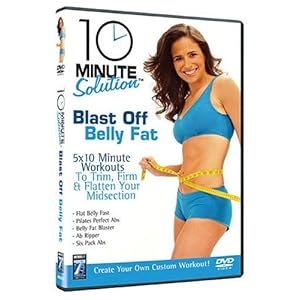
I skip the abs section of the workout and substitute 10 minutes of Pilates core work instead, because I think it's a lot better for my back. If you are really horrified with your mid-section and want to sort it out, I recommend this 10 Minute Solution workout. Anyone with no kids won't understand why finding even 10 minutes a day is impossible a lot of the time, but think what a difference it would make if you could. So stop thinking there's no point trying and just do it (cue a law suit by Nike). You might be pleasantly surprised at the results.
Subscribe to:
Posts (Atom)